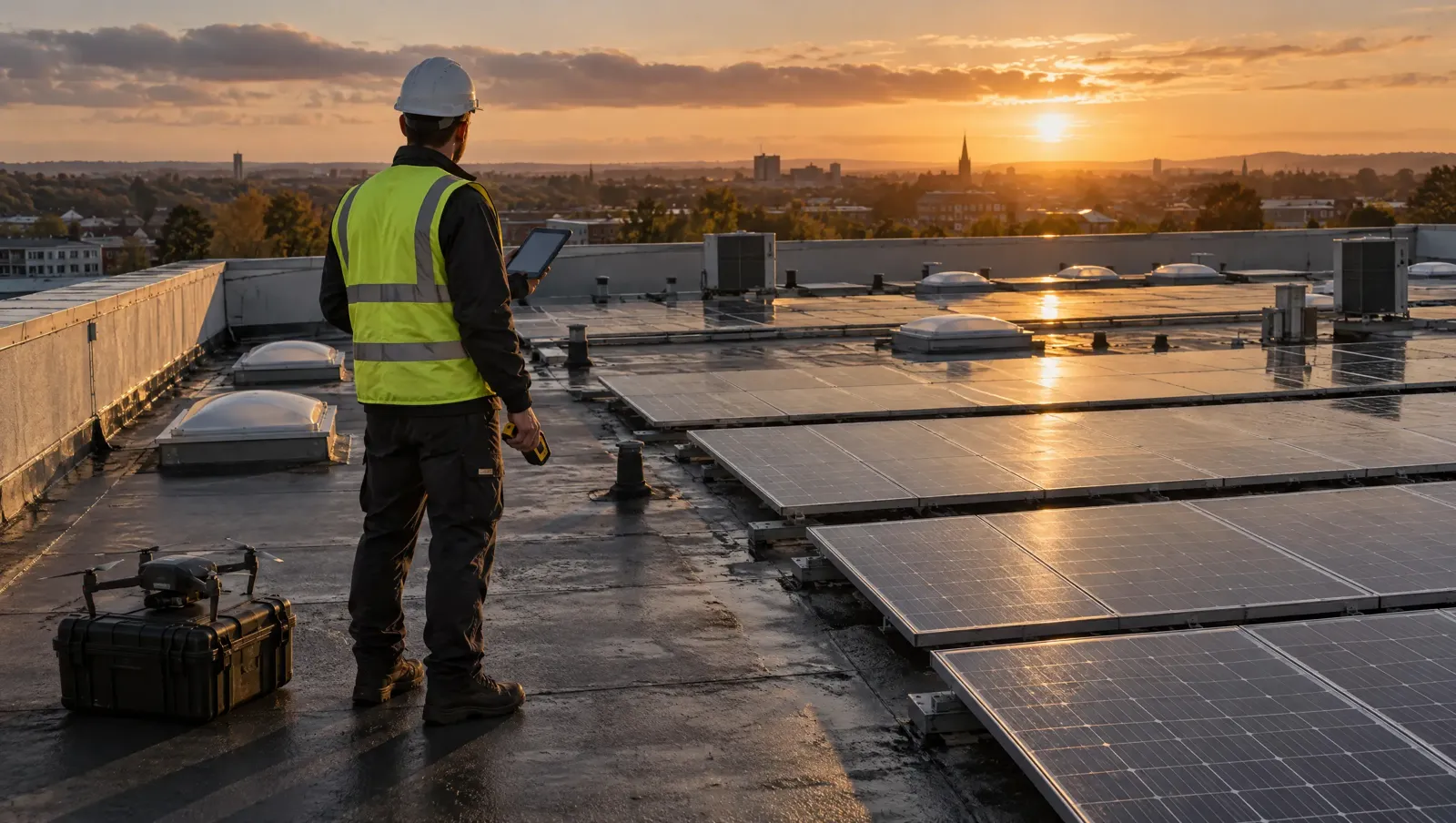
Getting your solar system size right is probably the most important decision you will make when switching to solar. Get it wrong and you end up with an array that is too powerful or too weak to cover your business energy needs. The most reliable way to find the right size is a review from expert installers, but understanding what affects the decision gives you a much better starting point.
Below we explore the factors behind 'what size solar system does my business need', then give some common examples so you know what to expect.
What Will Determine Your Business' Solar System Size?
- Your business' annual energy usage
- The amount of daylight your panels will be exposed to
- The size of the panels versus the size of your roof
- Your budget
Annual Energy Usage
Your annual energy usage is probably the most important factor, because if you want solar to cover most of your energy needs, you first need to know how much energy you use. This is easy enough to find: your annual energy bill summary shows your usage for the past year, or you can add up your monthly bills if you don't have one to hand.
Daylight Hours
The amount of daylight you get varies depending on where you are in the UK. It won't change your system size dramatically, but it can mean an installation in the north of the UK needs a panel or two more than an equivalent installation in the south to reach the same output. As a fair UK blended figure, expect around 850kWh of generation per installed kWp a year, roughly 750-800kWh/kWp in Scotland and 1,000kWh/kWp or more on the south coast. Your assessment calculates this for your exact location as part of designing your system.
Panel Size vs Roof Size
It doesn't matter what size system your usage points to if your roof can't accommodate that number of panels. And you won't be able to use your whole roof either.
North-facing roof sections are generally not worth using for solar, because their output is so badly affected by the angle to the sun. South-facing roof is optimal, and you will get the most out of your array there. East and west-facing sections can still be used, but you will want the majority of your system to be south-facing where possible.
You will need to measure your usable roof space to work out how many panels can realistically fit. Most commercial panels are around 2 metres by 1 metre, so allow around 2 square metres of roof per panel. This gives you a good idea of the maximum system size for your business, which you can then work back from.
Your Budget
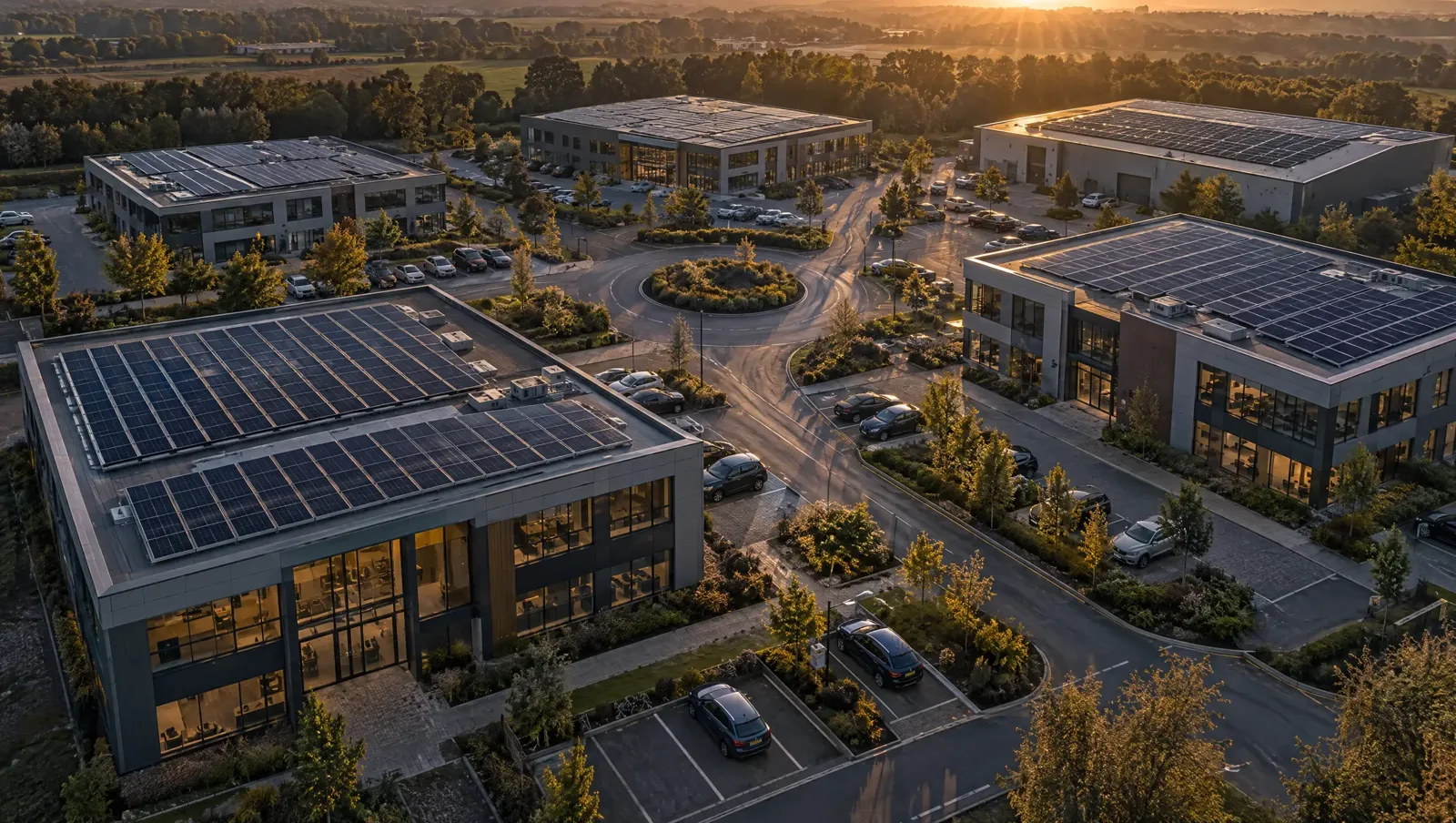
Your budget is the other major factor. Working out that your business needs a 250kW system is all well and good, but if you don't have the capital to spend on it, it isn't worth considering as a straight purchase. It's worth deciding roughly how much you are willing to spend before your free assessment, though remember buying outright is only one of four ways to pay - see our guide to commercial solar panel cost and how businesses fund it.
Be Willing To Compromise
Balancing usage, daylight, roof space and budget is rarely simple, which is why you may need to compromise to land on the right solar solution for your business. You might accept that 100% of your energy needs won't be covered by solar.
That's not the end of the world. You can still make a significant saving on your energy bills with a system that only covers part of your usage. It might be that an 110kW system would suit your energy needs best, but a 50kW system is a better match for your roof space or budget. You would still cover a meaningful share of your business' energy needs with that smaller setup, while making the most of your available roof space and budget.
Solar System Size And Their Uses
Below are some common solar system sizes for businesses and the type of building they typically suit. Note that although a given size is often a good fit for one type of building, the right size for your business is always the one that matches your specific energy needs, roof space and location - not a generic rule of thumb.
| System size | Ideal for | Typical annual saving | Price from |
|---|---|---|---|
| 50kW | office buildings | £7,306 | £45,000 |
| 100kW | warehouse buildings | £16,042 | £96,300 |
| 240kW | manufacturing plants | £36,531 | £212,500 |
| 500kW | distribution centres | £73,063 | £418,600 |
Illustrative examples only, and a guide, not a quote. Your assessment sizes a system to your own roof and bills.
When you get your free assessment, our installer Solar4Business may be able to offer a more bespoke package to get the closest match for your business. The table above should be used as a guide only.
What Size Solar System Does My Business Need: Conclusion
This guide should be treated exactly as that - a guide. The most reliable way to know what size system is right for you is to talk to an expert about your needs and work out which system will serve you best.
Know your usage
Pull your annual energy usage from your bills before you start sizing anything.
Measure your roof
Work out your usable, mostly south-facing roof space.
Set your budget
Decide what you can spend, then compare that against the four ways to pay.
Use this guide to get a rough idea of the system size your business might need. Find your usable roof space, work out your annual usage, set a budget, and you will have a good idea of what to expect. That gives you a strong starting point for the conversation with your installer, even if the final figure changes once your roof and bills are properly assessed.
Get your free solar assessment from Business Solar UK today, and we will work with you to design the right system for your building.