How Does A Solar Power Purchase Agreement Work?
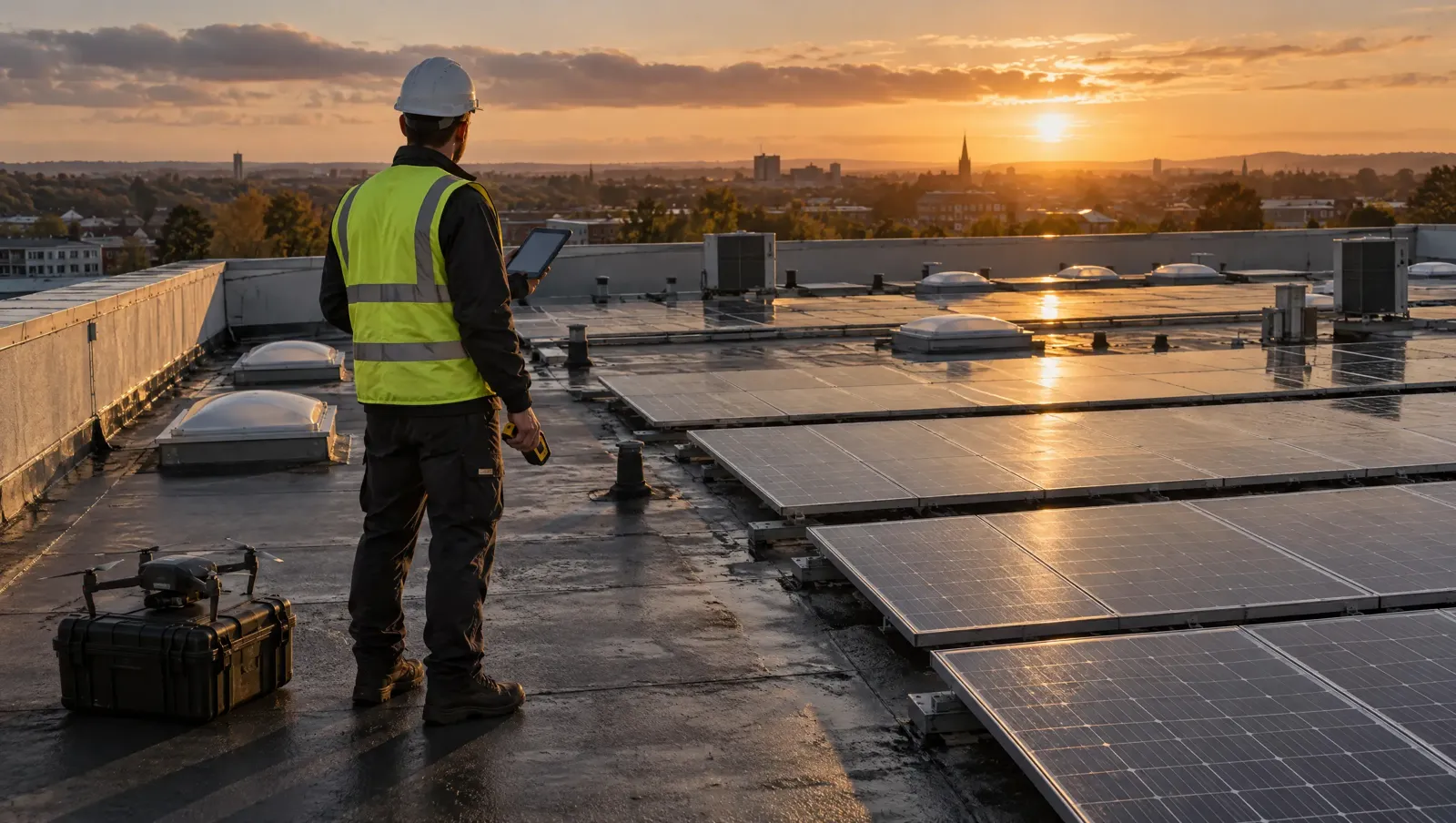
A Solar Power Purchase Agreement (PPA) is a long-term contract in which a funding partner installs, owns, operates and maintains a solar PV system on your roof or land. In exchange, you, the host, buy the electricity it generates at an agreed rate per kWh, usually set below your current grid tariff. Commercial solar PPAs typically run for 10 years and upwards, with some agreements extending to 25 years.
PPAs have become less common than they once were, because buying a system outright or on hire purchase has become more affordable. They still suit businesses that want the savings from solar without the upfront capital cost or the ongoing responsibility of owning and maintaining the system.
You and the funder agree a price per kilowatt-hour (kWh) of electricity consumed, which can be fixed or variable. A fixed rate gives you certainty over the contract term, but means you would not benefit if wholesale energy prices later fell. A variable rate moves with the market but is structured to stay below the equivalent grid tariff, so the savings case still holds even if rates shift.
As A Business Owner, What Are The Advantages Of A PPA?
A commercial PPA at a glance
Upfront cost
Typical contract term
Maintenance covered by the funder
Immediate Cost Savings
The biggest advantage of a PPA is the immediate cost saving with no upfront capital investment. Buying and installing a commercial solar system outright is a significant cost, and even with strong electricity savings it can take several years for a business to recover that outlay if funding the purchase itself. Our own package examples range from around £45,000 for a small office system up to over £400,000 for a large distribution centre - see the cost of commercial solar for the full breakdown. A PPA removes that capital requirement entirely.
No Maintenance
With a PPA, you are not responsible for maintaining the system. Solar panel maintenance in the UK includes visual inspection of the panels, inverter and cabling, a voltage check, and any repairs or replacements needed, plus regular cleaning to keep performance up, particularly on dustier sites. Under a PPA, inspection, cleaning and repair are all the funder's responsibility. See our guide to commercial solar panel maintenance for what this involves if you own the system yourself.
Performance Guarantees
Reputable providers offer performance guarantees, most commonly a production guarantee that the system will generate an agreed minimum number of kWh. If it generates less, the provider compensates you, either as a bill credit or a refund of the shortfall in value.
What Are the Disadvantages of PPAs?
Long Term Contract
PPAs typically run from 10 up to 25 years, and both parties are bound for that term. If you need to end the contract early, for example because you are closing, selling or relocating the business, you will usually face a termination fee, though these tend to reduce the longer the contract has run. You could also miss out on savings if wholesale energy prices fall sharply after you have agreed a fixed rate.
No Tax Benefits
Because you do not own the panels under a PPA, at most you are hosting them, you cannot claim the capital allowances available to businesses that buy their system. Businesses that buy their solar system outright can offset the cost against corporation tax using the Annual Investment Allowance and, for spend above the AIA cap, a first-year allowance - see our guide to solar panel capital allowances. A PPA trades that tax relief for £0 upfront cost.
May Not Always Be the Best Financial Choice
If your roof gets limited daylight or is heavily shaded, the system will generate less electricity and the PPA rate will save you less. Some PPAs also include a price escalator that raises the rate over the term, which can erode the initial saving. Buying a system outright can offer a stronger long-term financial return where you have the tax position and the capital to do it, because the only ongoing costs are maintenance, rather than a monthly payment to a funder.
Solar Panels May Be More Affordable Than You Think
A PPA appeals to businesses that want immediate savings with no upfront cost, but it is not the only way to manage that cost. Asset finance can spread the cost of a system you own over a fixed term, with repayments set against your expected bill savings. You can also earn from exporting surplus electricity through the Smart Export Guarantee, which is available on systems up to 5MW.
Types of Solar PPAs
Depending on your business and site, several types of solar PPA are available. Most UK commercial PPAs are on-site agreements, but it is worth understanding how the others work.
On-site PPA
The most common type of solar PPA. The funder installs panels on your own roof or land, and you buy the electricity generated there. As a rough guide, around 1m² of roof or ground space is needed per kW of installed capacity, though the actual figure depends on your panel choice and layout.
Off-site PPAs
Off-site PPAs let a business access renewable electricity without installing anything on its own property. Power is generated elsewhere and delivered to the business through the public grid.
Virtual PPAs
With a virtual PPA, you purchase the renewable attributes of a solar project rather than the physical electricity itself. This suits businesses that want to reduce their carbon footprint or grow their renewable energy credentials but do not have the roof space or infrastructure to host panels.

Physical Delivery Power Purchase Agreement (PPA)
A Physical Delivery PPA is a contract to buy electricity directly from a renewable generator, such as a solar farm, with the power transmitted to you through the grid.
Block Delivery PPA
Unlike a Physical Delivery PPA, a Block Delivery PPA does not commit you to buying all the electricity a provider generates. Instead you purchase set blocks of electricity when it is most abundant and least expensive, while the provider still installs and maintains the generating system.
Portfolio PPA
A Portfolio PPA lets you buy electricity from a list of renewable projects rather than a single site. This spreads the risk of downtime or underperformance across several projects and can give you more room to negotiate on price.
How to Choose a PPA Partner
Experience
Look for a provider with a proven track record in solar project delivery. Read reviews and testimonials from other clients, and where possible speak to a client directly about their experience.
Creditworthiness
Check the financial health of the provider, since they are committing to fund, install and maintain your system for years to come. A provider with a weak credit position is a bigger risk to the length of your agreement.
Performance Guarantees
Ask how the provider defines and measures its performance guarantee, and how you would be compensated if the system underperforms against the agreed forecast.
Termination Clause
Review the terms for early termination carefully, including any fees. Fees that stay flat throughout the contract, rather than reducing over time, are worth questioning.
Transparency
Make sure the pricing structure, contract length, termination fees and any rate escalators are written into the contract clearly. Ask about anything that is not obvious, and take legal advice on the contract if you want a second opinion before signing a 10 to 25 year agreement.
Technical Expertise
The provider's installation team should be experienced in designing, installing and maintaining commercial solar systems, not just selling the contract.
Financial Stability
A PPA is a long commitment, so ask about the provider's financial backing and how it plans to manage risk over the life of the contract.
Final Thoughts – Is a Solar PPA Worth It?
A solar PPA can be an excellent option for businesses that want to cut energy bills and their carbon footprint without tying up capital. Whether it is worth it for you depends on your projected energy savings, your appetite for a long-term contract, and whether the tax relief available to owners matters more to you than a £0 upfront cost.
A PPA offers substantial savings with no responsibility for installation or maintenance; owning your system outright or on hire purchase can be more financially rewarding over the long run, especially with capital allowances factored in. Get your free assessment and we will model all four ways to pay against your own roof and bills, so you can weigh a PPA against the alternatives with real numbers.